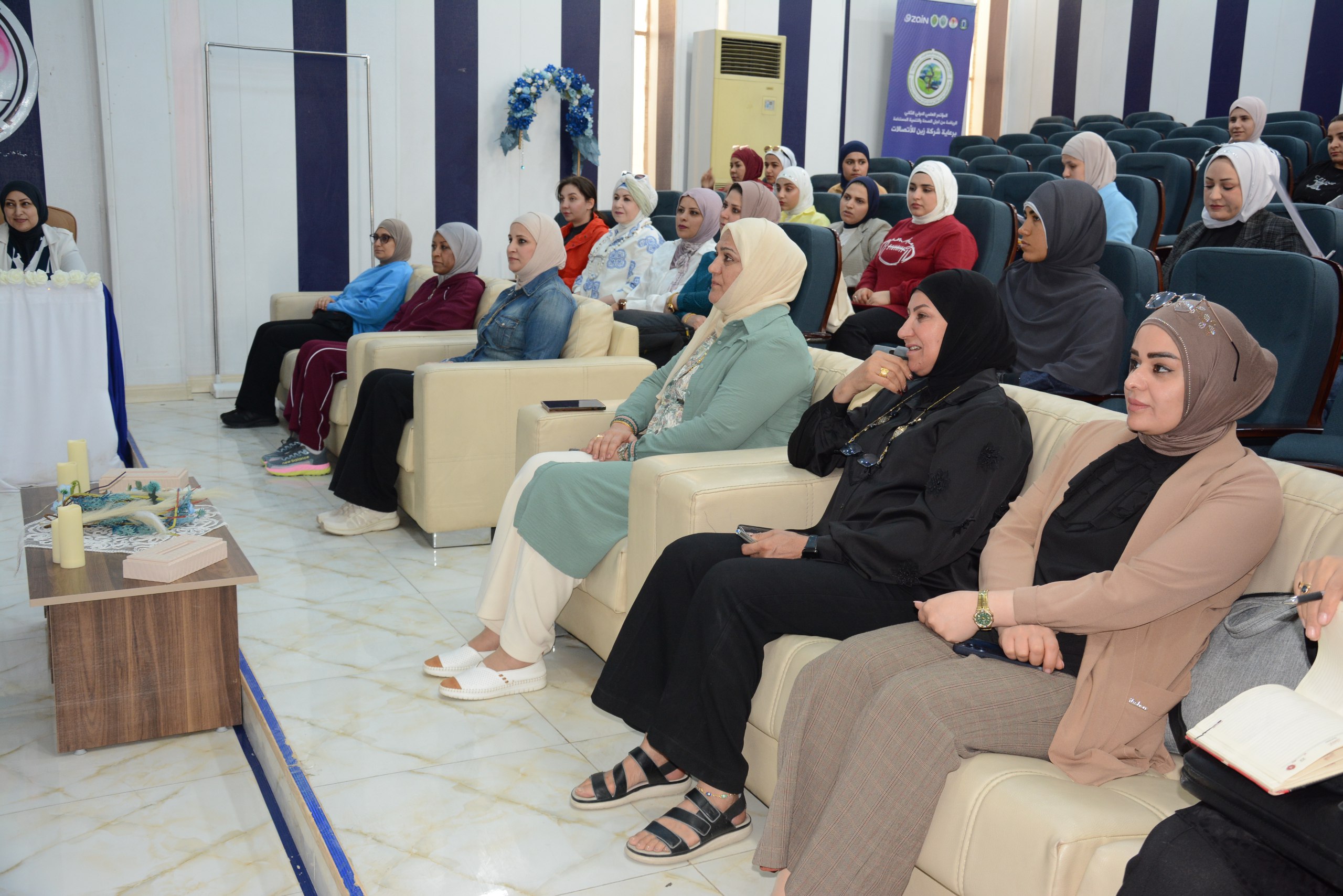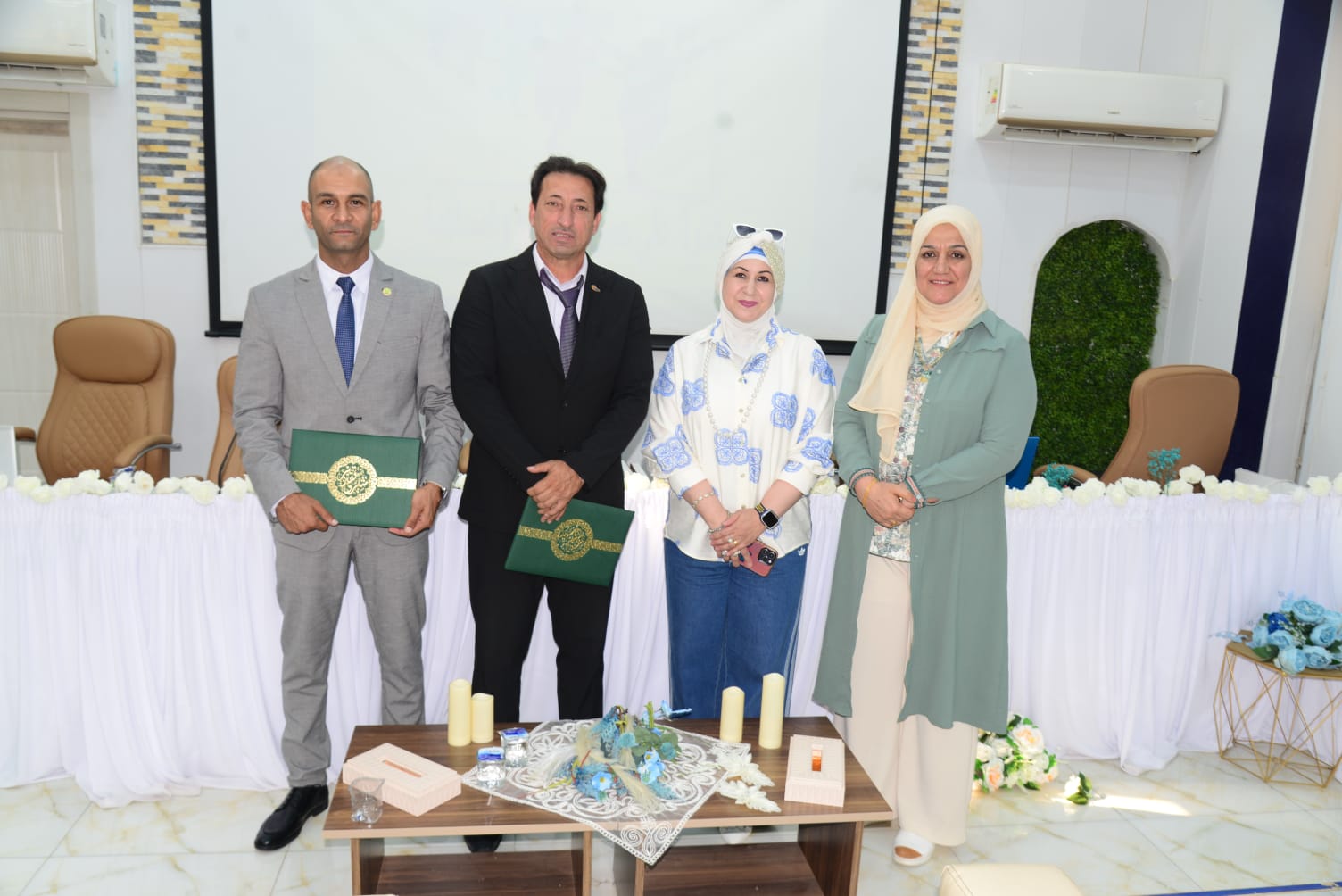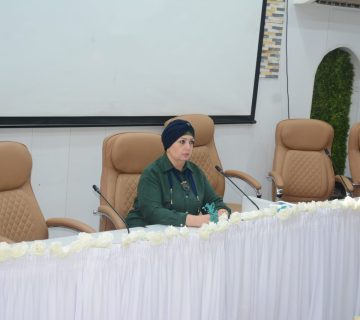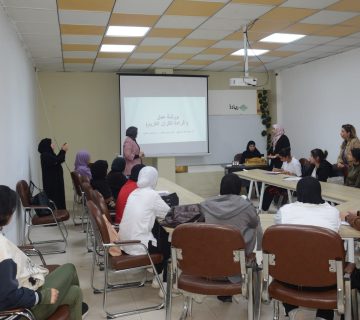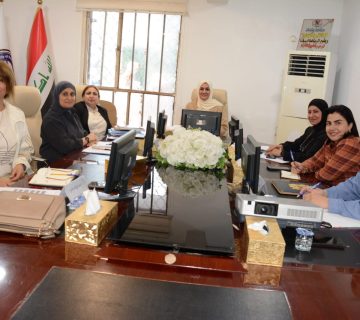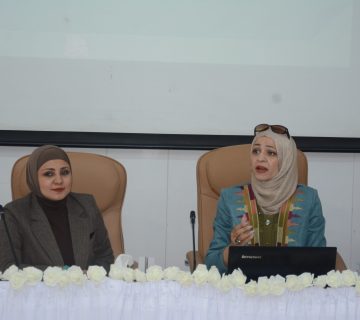
The Scientific Affairs Unit at the College of Physical Education and Sports Sciences for Women, University of Baghdad, hosted—under the patronage of the Dean, Prof. Dr. Fatima Abd Maleh—both Prof. Dr. Ali Sadiq Thiyab, Head of Student Activities at the University of Baghdad, and an Assistant. Prof. Moamen Mohammed from the Faculty of Physical Education and Sports Sciences at the University of Alexandria, to present a workshop titled (Management of International Sports Festivals.). The event was attended by several faculty members, students, and individuals interested in sports affairs.
The workshop covered two main themes.
The first focused on defining sports festivals as the art and science of organizing major sports events, such as championships, international games, and recreational festivals with a sports character. Their purpose is to achieve organizational, technical, and economic success while enhancing the host country’s or organizing body’s cultural and tourism image.
The speakers also highlighted several key objectives of managing sports festivals, including: organizing a distinguished sports event that satisfies participants and spectators, promoting sports tourism and attracting local and international visitors, raising sports awareness and encouraging youth participation, generating economic and media returns for the organizers, and strengthening international relations through cooperation among sports federations and organizations.
They emphasized essential steps in managing sports festivals, such as: early planning, defining general and specific goals, developing a comprehensive timeline, preparing a budget and identifying funding sources and sponsors, forming organizational committees (security, media, public relations, services), clearly assigning roles and responsibilities, coordinating with governmental and sports authorities, marketing and sponsorship through strategic plans to attract audiences and partners, managing branding and media agreements, ensuring safety and security by developing clear emergency plans and coordinating with security and medical entities, and finally, conducting evaluation and follow-up.
The second theme addressed the concept of competitive sports activities, defined as activities organized by specialized bodies that arrange competitions or matches involving elite teams in each sport. These activities are shaped by several essential components, such as athletes, coaches, available resources, societal culture, and regulations.
At the conclusion of the workshop, the presenters shared several recommendations, most notably: ensuring that competitive sports are aligned with the values and higher objectives of the state to create a healthy sporting environment; the need for the Olympic Committee to adopt the state’s goals and elevate sports through scientifically grounded programs that sports federations must adhere to; and establishing specialized sports schools capable of selecting the most promising young talents.
This workshop supports two Sustainable Development Goals: Goal 4 (Quality Education) and Goal 17 (Partnerships for the Goals).
The Scientific Affairs Unit at the College of Physical Education and Sports Sciences for Women, University of Baghdad, hosted—under the patronage of the Dean, Prof. Dr. Fatima Abd Maleh—both Prof. Dr. Ali Sadiq Thiyab, Head of Student Activities at the University of Baghdad, and an Assistant. Prof. Moamen Mohammed from the Faculty of Physical Education and Sports Sciences at the University of Alexandria, to present a workshop titled (Management of International Sports Festivals.). The event was attended by several faculty members, students, and individuals interested in sports affairs.
The workshop covered two main themes.
The first focused on defining sports festivals as the art and science of organizing major sports events, such as championships, international games, and recreational festivals with a sports character. Their purpose is to achieve organizational, technical, and economic success while enhancing the host country’s or organizing body’s cultural and tourism image.
The speakers also highlighted several key objectives of managing sports festivals, including: organizing a distinguished sports event that satisfies participants and spectators, promoting sports tourism and attracting local and international visitors, raising sports awareness and encouraging youth participation, generating economic and media returns for the organizers, and strengthening international relations through cooperation among sports federations and organizations.
They emphasized essential steps in managing sports festivals, such as: early planning, defining general and specific goals, developing a comprehensive timeline, preparing a budget and identifying funding sources and sponsors, forming organizational committees (security, media, public relations, services), clearly assigning roles and responsibilities, coordinating with governmental and sports authorities, marketing and sponsorship through strategic plans to attract audiences and partners, managing branding and media agreements, ensuring safety and security by developing clear emergency plans and coordinating with security and medical entities, and finally, conducting evaluation and follow-up.
The second theme addressed the concept of competitive sports activities, defined as activities organized by specialized bodies that arrange competitions or matches involving elite teams in each sport. These activities are shaped by several essential components, such as athletes, coaches, available resources, societal culture, and regulations.
At the conclusion of the workshop, the presenters shared several recommendations, most notably: ensuring that competitive sports are aligned with the values and higher objectives of the state to create a healthy sporting environment; the need for the Olympic Committee to adopt the state’s goals and elevate sports through scientifically grounded programs that sports federations must adhere to; and establishing specialized sports schools capable of selecting the most promising young talents.
This workshop supports two Sustainable Development Goals: Goal 4 (Quality Education) and Goal 17 (Partnerships for the Goals).